




FINGER ON THE PULSE®
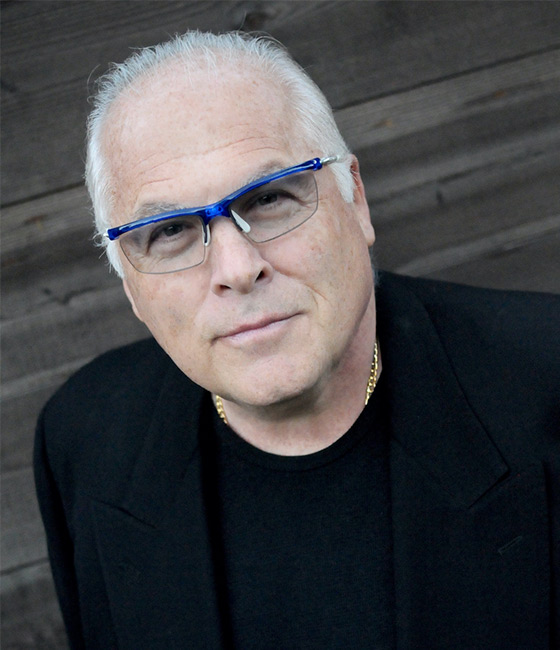
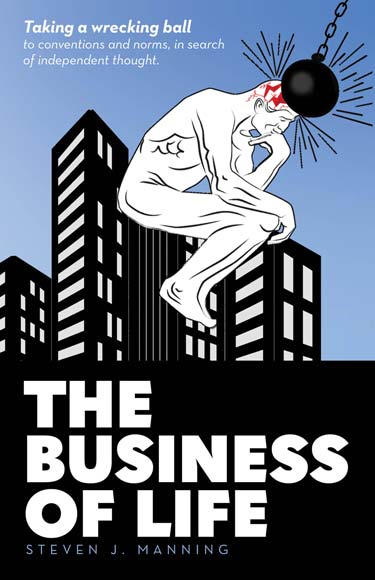
By Steven J. Manning
● THE WORLD AT WAR
● HOW ABOUT A WARNING PACKAGING LABEL. OR WOULD IT BE A WELCOME PROMISE?
● I AM OWED
● FRIENDS AND NOT SO MUCH
● “FUN FACT” FROM OUR OTHERWISE SERIOUS BRITTISH COUNSINS
● MORE FUN STUFF
Our world is vast yet intimate, complex yet traceable, ancient yet immediate, often regressive, sometimes compellingly timely, and occasionally progressive.
It is resilient but not invulnerable, abundant but not equitable, knowable yet never fully known—where signals of things to come are seldom subtle. Noise is loud, outcomes judge intentions—the good, the bad and the ugly.
The world is finite, interdependent, and unforgiving of illusion. Wisdom is often a conveniently ignored nuisance, rather than a catalyst for clear perception and disciplined action.
THE WORLD AT WAR
Thank you, readers of FINGER ON THE PULSE®. You are among the best-informed people anywhere. Thus, I shall not launch into a long dissertation on the some 25 “major” wars and over 100-armed conflicts raging in the world. The human species at its worst.
But a couple observations about the three wars, existential and material to survival for millions of people. And one that is always doing a precarious dance on a very thin wire.
Iran.
A nuclear Iran is THE nightmare. Unless we are prepared to simply write-off a few million Jews living in Israel. Many more millions in Iran’s neighborhood. And in time, New York, Washington, Chicago, Los Angles… You get it. All those right after Paris, Rome, London and ….
How about another nightmare. The mission being fought today fails. No. It would not fail because of US military wherewithal. It could if ending that would be a political calculation. If that would happen—pray not, if you can and are willing—consider the nightmare of Israel having to do what it must, to ensure its very survival.
Last comment on this… It is naiveté of stratospheric scale to negotiate with the Iranians. Particularly with whoever asserts to be in charge, today. They have assured limited life expectancy. So… Jaw on at our own risk.
The conflict that is always at a boiling point, a precarious war-dance on a razor’s edge: Pakistan—the most dangerous place on earth, I posit—and India. 253 million Shia Muslims with nuclear weapons. In a perpetual war with a couple billion Indians with nuclear weapons. What could go wrong.
Mark me down a cynic on this one. The trump negotiated peace is just a temporary mitigation. It will not survive once the tariff threats regress to a tenuous status quo. Until everybody gets used to them.
JUST WONDERING…
Kinda asking the U.S. major media: is there still a war in Ukraine? Yup. Estimated 35,000 casualties in the past month. How about Israel still at war with Gaza? Yup. Likely 1,000 casualties in the past month. How about Israel and Hezbollah in Lebanon? Yup. Some 2,000 casualties in the last thirty days.
HOW ABOUT A WARNING PACKAGING LABEL. OR WOULD IT BE A WELCOME PROMISE?
On all GLP-1 receptor agonists: OZEMPIC, WEGOVY, MOUNJARO, ZEPBOUND, VICTOZA, SAXENDA, TRULICITY, EXANATIDE AND LIXISENATIDE (GLP-1 receptor agonists).
To the 30 + Million Americans who are taking these “miracle” drugs. IMPORTANT: 25% more women than men… Read on for not-at-all tenuous relevance to the need or desirability of placing a “WARNING LABEL” coming below…
First, good news and bad news…
THE GOOD ONES. THE BAD ONES. THE BIGGIES… AND A “WARNING /PROMISE” LABEL…
- Significant and Sustained Weight Loss –— a big “hmmmmm” as to the “sustained” part. Are you buying that without “sustained” effort like diet and exercise. Oh, well, do so at your own risk (eventual failure).
- Improved Blood Sugar Control —– right until you go back to your old eating habits.
- Cardiovascular Protection —- reduce the risk of major adverse cardiovascular events.
- The Warning/Promise Label that should be placed on all these drugs: Taking this drug may significantly increase the likelihood of getting a divorce.
If the widely cited 2018 Swedish study on bariatric surgery—gastric banding, bypass—serious, irreversible interventions—and its association with shifts in relationship status is any indication, we should pay close attention. Post-procedure, the probability of divorce rises; so does the likelihood of leaving a partner who had long tolerated obesity. Such ingratitude…
Now consider what follows. We are no longer confined to major surgery. We have a new class of interventions—less invasive, easier to administer, increasingly available in oral form, and materially less expensive. Ozempic, Mounjaro, Zepbound et al. If the surgical data were a signal, these agents may prove to be a force multiplier. Hold onto pre-GLP-1 divorce statistics. They will—perhaps already have—aged poorly!
Insurance dynamics reinforce the shift. Bariatric surgery remains difficult to secure outside extreme cases. Pharmacology does not face the same barrier.
There is, however, a governing reality. When patients discontinue these drugs, a meaningful portion of the gains erode. Weight regain is often rapid—frequently approaching two-thirds of lost weight within a year—accompanied by deterioration in glycemic control, lipids, and blood pressure. Biology reasserts itself with discipline.
Meanwhile, at this writing, I am preparing a substantial batch—a big bunch—of my “world-famous” potato salad. Call it culinary satisfaction, or a modest act of solidarity with U.S. potato farmers who are being decimated by dramatically reduced demand. It is not merely shifting; it is being rewritten. Thanks to those fine drugs, cravings for simple carbohydrates are, for many, being systematically quieted.
I will share the potato salad with friends. Perhaps it becomes a small fad. Then again, I do reside in Los Angeles.
I AM OWED
I have long argued—and made a disciplined attempt to live—within both my intellectual work and personal spheres by a single standard: equitable exchange of value. In plain terms: is this as fair to me as it is to you?
Compelling question to myself, an admitted collector of people and stories. At least according to my publishers. And also, with a career of tens of billions of dollars in revenue flows, across many disciplines, on three continents.
Recently, I conducted a candid inventory. What surfaced—whether one chooses to label it conceit or concede it as empirical—is this: I am owed.
A slightly uncomfortable question, then—deliberately so:
How are you doing with that?
FRIENDS AND NOT SO MUCH
How about a few sharp takes—no, let us be honest, selectively superficial—on friends, non-friends, and those who oscillate depending on the week. The topic has occupied the headlines for… long enough.
The United Kingdom. France. Spain.
And then, Italy.
- United Kingdom
One observes a certain studied fragility—lace cuffs, tightened inherited white pearls, and a reflexive recitation of heritage. Byron is invoked with confidence, while Shakespeare, perhaps, with less certainty. Or is it the spelling challenge. Posture substitutes for position more often than it should. - France
Intellectual self-regard remains a national sport. Relevance is pursued with admirable persistence, if not always with measurable effect. As for future “Normandy invitations”—history is best respected, not reenacted. - Spain
A nation of considerable gifts, operating at times with a relaxed relationship to economic gravity. If prosperity is optional, the model holds. If not, external dependencies begin to matter—particularly when one contemplates the quiet arithmetic of U.A. security guarantees, bases, and trade exposure. Tariffs, should they arrive with force, will not be philosophical. Rather catastrophic. Sign me up. - France, again—because it insists
The culinary argument is overstated. The United States produces exceptional bread, serious cheese (Wisconsin alone is an industrial rebuttal), and increasingly credible wines—from California to New York to Washington. Outside the gastronomic priesthood, dependence on French supply is… negotiable. - Italy
A more complicated admission. Having lived there in youth, and returned often, the affection endures—selectively. One can do without the politics, although I am a possible soon relapsing Melone fan!
One cannot easily dismiss the design, the engineering, the aesthetic confidence—those unapologetically red machines from Marinello that make restraint feel like a character flaw.
As for the downfall of all diets, the bread—Puglia, Tuscany, Sardinia—yes, exceptional.
And yet, there are bakers on Arthur Avenue in the Bronx, and even in Los Angeles—where culinary self-regard occasionally outruns substance—who produce loaves capable of unsettling the most assured connoisseur.
Special mention about pizza…
Fortunately, the best is not exported. It requires presence. Piazza Giuseppe Garibaldi, Tivoli—near Rome. A long journey for many of my readers. Worth the trouble and the expense!
If you are serious, I will point the way.
“FUN FACT” FROM OUR OTHERWISE SERIOUS BRITTISH COUNSINS
The spectacle is not subtle: a nation rich in North Sea reserves constrains its own production, then turns outward paying a premium for supply sourced a short distance away. Buying from Denmark.
Call it policy if one prefers. It reads, more precisely, as a self-imposed dependency—where ideology displaces judgment and energy security is treated as optional.
Yes. Even contemplating that the assertion of dwindling deposits (UK) was taken seriously, heck, we all know why the “bend-over” took place.
Absurd, yes. Amusing, briefly. Consequential, unmistakably.
MORE FUN STUFF
- Did you buy a ticket for the “1 Picasso for €100 ” raffle at Christie’s in Paris? Pablo Picasso’s 1941 gouache Tête de Femme (valued at over $1 million) was the prize. Proceeds support Alzheimer’s research. 120,000 tickets were sold. The drawing took place yesterday.
If my partner—the man I split the cost for one ticket—stops responding to my calls and emails, I will know that I won.
- Fasten your seatbelt.
We—the Mannings—have operated at the center of mass marketing for decades. Early to technologies that, not long ago, were dismissed as science fiction, now routine infrastructure. Big data. Blockchain. Artificial Intelligence—engaged since the early 1980s. A body of work measured in millions of words. Hundreds of expert briefings delivered and recorded. Counsel to dozens of leading global enterprises across the most consequential sectors.
Two days ago, we renewed our library cards. I mean, stopped in at the nearest public library and renewed our cards. The nice people there elected to waive the $2.00 renewal fee!
We are, by any reasonable measure, more likely to have books we write placed on shelves than to check them out. Even so, we chose to participate in a quiet resurgence: the public library—reimagined as maker space, career resource, and civic hub. People are returning. In force!
When institutions evolve, relevance follows.
When was the last time you browsed a library without a screen in hand? Your computer or smart mobile? The answer is instructive. Me too…
A final observation: libraries and bookstores possess a distinct atmosphere—an unmistakable signal. To serious readers, it is not nostalgia. It is an intoxicant. Although I am never away from my mobile, rarely from my laptops and my Kindle, I still love walking through—read that as getting lost for many hours—Book Soup in Los Angeles, Strand in New York, Foyles in London, Librarie Galignani in Paris, Feltrinelli in Rome, La Central in Madrid, Powell’s in Portland, Massolit in Budapest and their peers.
With everything, EVERYTHING we need and want available at our fingertips, I opine—well, more than just opinion, observation—that the serious reader does not purchase books. He selects environments. A final, practical note. Books must still be bought. Otherwise, these institutions become stories—recalled by those who remember what they once made possible.
AI
I nearly got through a few thousand words without mentioning AI. That omission borders on dereliction—if not a statutory offense.
In the interest of health—and reputation—a brief note on something that is, in equal measure, remarkable, unsettling, and consequential. Draw your own conclusions.
Many of you have heard of—some of you use—Claude by Anthropic. An advanced system that reasons, writes, and assists with complex tasks. Likely among the most widely used AI tools in the world.
Then there is Claude Mythos.
A restricted—for now—experimental system designed to identify—and exploit—cybersecurity vulnerabilities. Not theory. Function. It can find weaknesses and determine how to break into systems on its own. The issue is not intelligence. It is speed and autonomy, applied to systems not designed to withstand either.
Bottom line, in the vernacular: it could enable non-experts to conduct serious cyberattacks.
Now consider the posture. Build the capability. Do not release it broadly. Brief major financial institutions and engage government at the highest levels regarding its potential for disruption.
Translation: this works. And it demands control. But it is up to you.
Or, stated less formally: please buy the product—just do not use it to dismantle the known world.
And to those responsible for critical systems: assume more people will soon hold the keys to your kingdoms.
Then there is the small matter of “tension” with defense authorities. Anthropic insists on constraints in use of Claude. The Department of War, by definition, prefer latitude. Those Claude-people have rare degree of nerve.
More soon. Thanks for reading.
©2026 Steven J. Manning. All rights reserved worldwide. No part of this publication may be reproduced, stored in a retrieval system, or transmitted in any form or by any means—electronic, mechanical, photocopy, recording, scanning, or otherwise—except for brief quotations in reviews or articles, without prior written permission.
0 Comments